

Finding a thick, velvety layer of green moss on your fruit tree trunks might seem natural, but it often signals an underlying issue in your orchard’s ecosystem. While moss itself isn’t a parasite, it acts as a sponge – trapping moisture against the bark, harboring pests, and blocking the tree’s lenticels (pores used for gas exchange). Left unchecked, it can lead to bark decay and decreased fruit production.
The professional 3-step guide to moss removal
Clearing moss requires a balance of physical removal and organic treatment to ensure the tree isn’t damaged in the process.
Step 1: Prune affected branches
Trim smaller branches that are heavily covered with moss. Keep most of the thicker structural branches intact to maintain tree strength.
Step 2: Manually scrub moss off
Purchase an iron brush from a gardening or hardware store. Gently scrub moss from thicker branches and trunk surfaces. This physically removes buildup and allows better light exposure.
Step 3: Apply moss control treatment
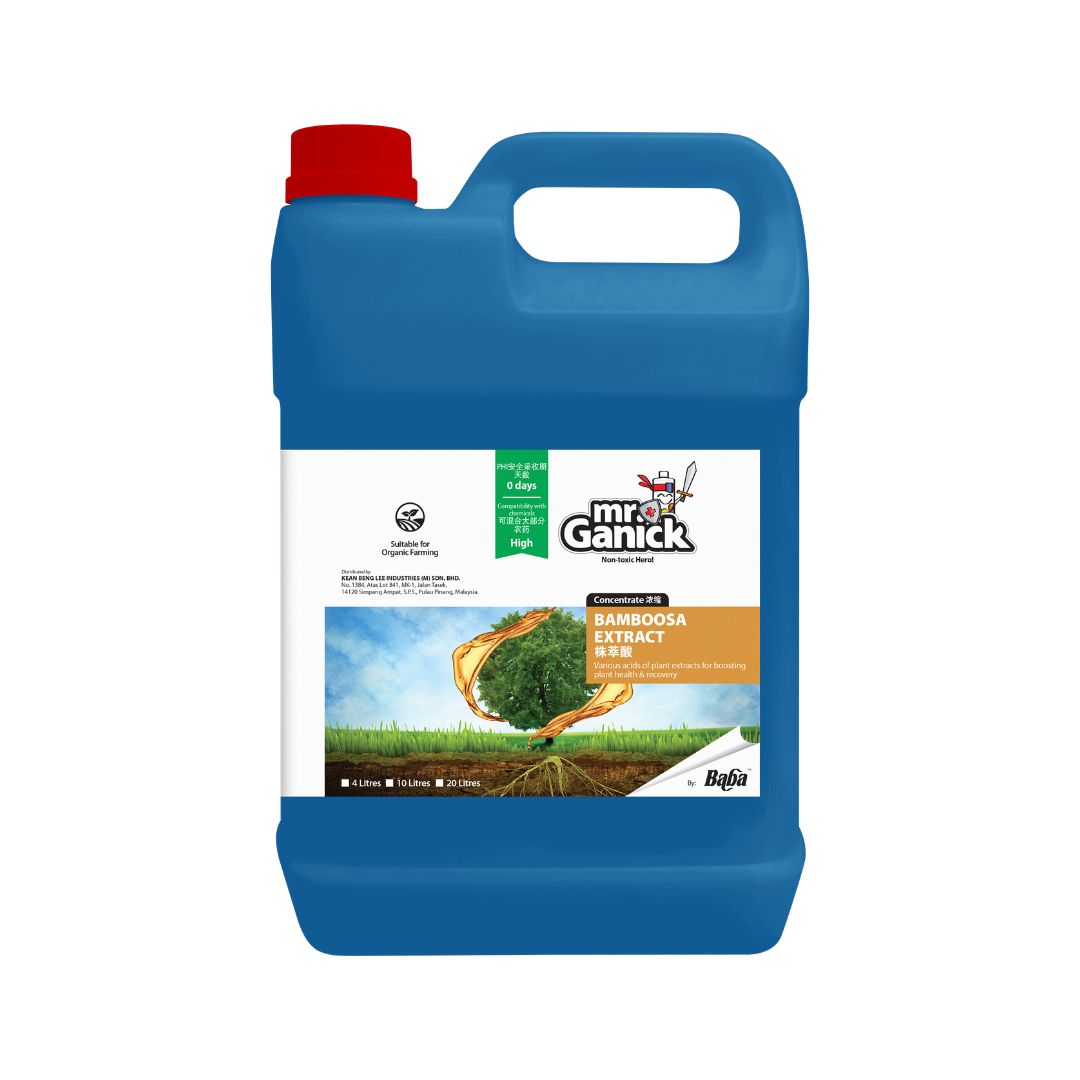
Mix 50ml of Mr Ganick Bamboosa Extract with 1L of water.
⚠️ Important:
- Spray only on the stems and trunk
- Do not spray on leaves or young branches
- Apply during daytime
- Repeat once a week for at least 3 treatments
- If it rains within 3 hours, repeat the application
Improvement is usually visible after about three treatments. Moss will gradually fade and lighten over time.
Why is moss growing on your tree trunk?
To solve the problem, we must first understand why it started. Moss typically thrives when one or more of these conditions are met:
- Poor Environmental Management: High humidity is the primary driver. If your fruit trees are planted too densely or have heavy shading from unpruned branches, sunlight cannot reach the trunk. This creates a damp, stagnant environment perfect for moss spores.
- Nutritional Imbalance: Frequent use of highly acidic foliar fertilizers can inadvertently lower the pH on the bark surface. This creates a localized “acid rain” effect that encourages moss to spread from the branches down to the leaves and fruits.
- Declining Tree Vigor: Healthy, fast-growing trees often shed microscopic layers of bark, making it hard for moss to take hold. Older trees or those with aging root systems have slower growth cycles and weaker resistance, making them easy targets for colonization.
How to prevent moss from returning?
To reduce future moss growth:
- Improve orchard ventilation
- Reduce excessive shading by pruning
- Avoid overwatering
- Strengthen overall tree vigor with balanced fertilization
Healthy, well-ventilated trees are far less likely to develop heavy moss growth.
Protect your trees and prevent moss before it spreads
Moss on tree trunks often signals excess moisture and poor airflow rather than a disease. Proper pruning, manual cleaning, and targeted treatment help restore balance and prevent moss from spreading.
Support healthier trees with Baba gardening supplier’s plant care solution. Explore our organic fertilizer and plant pesticide to help protect tree bark and maintain stronger plant health.


