

A durian tree that has grown tall and thin, with a damaged or weak top but new leaves emerging at the lower trunk, is often a sign of aging stress or poor canopy balance. In many cases, older trees reach a stage where fruit production declines because the root system weakens and energy distribution becomes inefficient.
If your goal is to rejuvenate the tree for fruit production, the focus should not be on forcing flowering immediately. Instead, priority must be given to root regeneration and canopy rebuilding.
The right approach: Strengthen roots first
An old durian tree that has stopped fruiting typically suffers from declining root vigor. Without strong roots, the tree cannot support flowering or fruit development.
To restore vitality, apply a structured monthly feeding program:
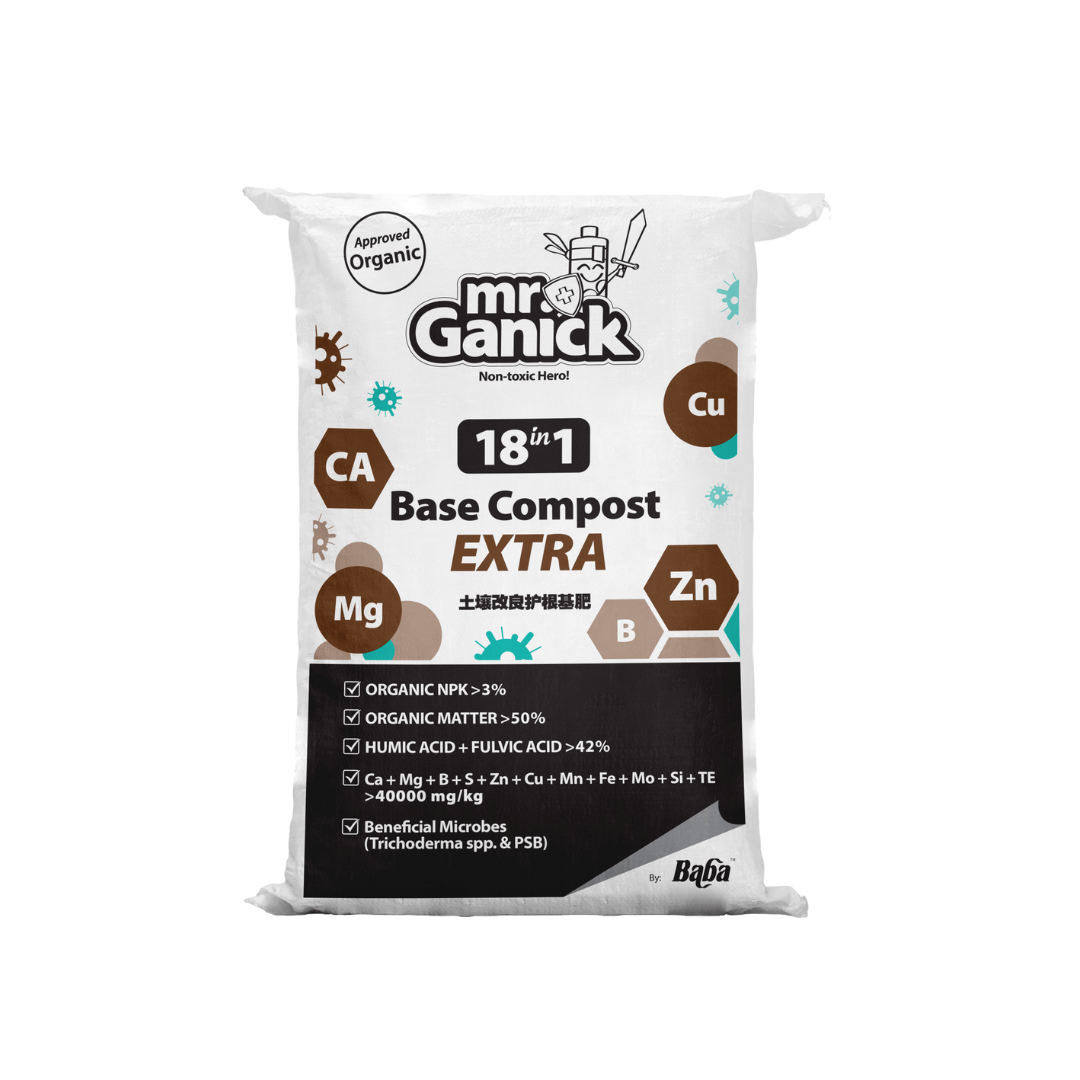
- Month 1: Apply 25 kg of Mr Ganick Base Compost Extra per tree
- Month 2: Apply 5 kg of Mr Ganick 18 in 1 Organic Leaf & Growth Boosting Fertilizer per tree
Alternate these two applications every month. This cycle helps:
- Improve soil structure
- Stimulate new root growth
- Encourage healthy leaf and branch development
- Build energy reserves for future fruiting

Rebuilding the canopy
For durian trees shaped like an umbrella canopy, maintaining balanced foliage is important. As new leaves grow:
- Avoid excessive pruning
- Allow strong lateral branches to develop
- Support even canopy distribution
Once sufficient leaf mass is restored, the tree can resume efficient photosynthesis and energy storage.
When will the tree bear fruit again?
Rejuvenating an old durian tree requires patience. With consistent care:
- Root strength improves within several months
- New branches and leaves increase gradually
- Energy reserves rebuild over time
After 1–2 years of proper maintenance, and when weather conditions are favorable, flowering may resume naturally. Forcing fruit too early may weaken the tree further, so gradual recovery is key.
Why does the tree look this way?
When the top canopy is damaged due to wind, disease, or aging:
- Nutrient flow to upper branches weakens
- The tree redirects energy to lower sections
- New shoots emerge near the base
Although the appearance may seem alarming, the presence of new bottom leaves is actually a positive sign—it shows that the tree is still alive and capable of recovery.
Help your durian tree recover and grow stronger again
A durian tree that grows tall with a damaged top often needs time and proper care to recover. Strengthening the root system and rebuilding the canopy helps restore plant balance and improve long term productivity.
Use fertilizer for fruiting and organic soil to nourish the soil and support healthier durian tree growth.


