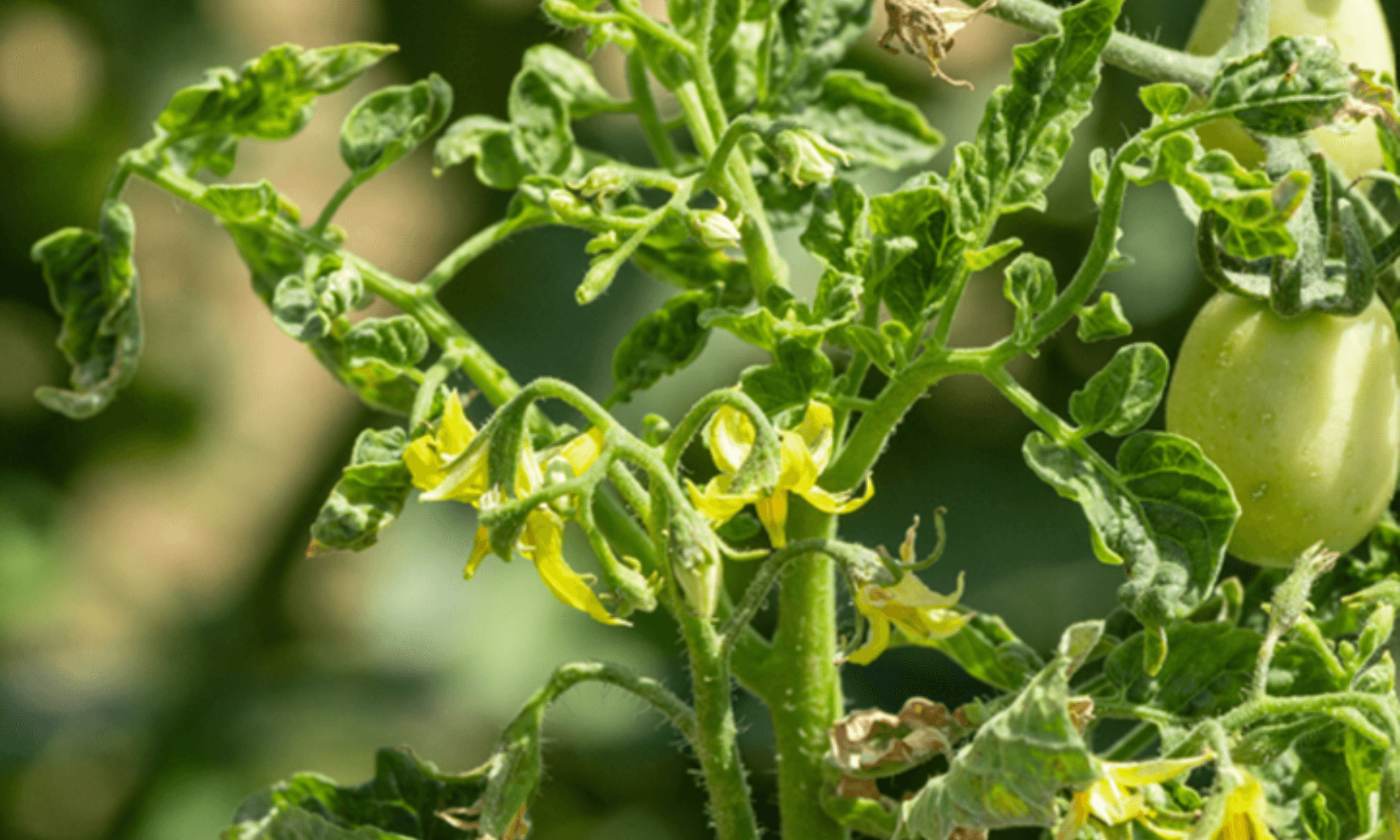
Wood-boring insects are a serious threat to durian trees. If left untreated, they can weaken the trunk, disrupt nutrient flow, and eventually cause tree decline or death. These pests are usually the larvae of wood-boring beetles or longhorn beetles, which tunnel into the trunk and feed from the inside.
Early identification is critical, as treatment methods differ depending on the size of the holes found on the trunk or branches.
Treatment for small holes (under 1mm): Wood-boring beetles
When the holes are small, the infestation is usually still manageable with targeted injection treatment.
- Gently scrape the area around the hole until you see fresh white tissue. This exposes the insect entry point.
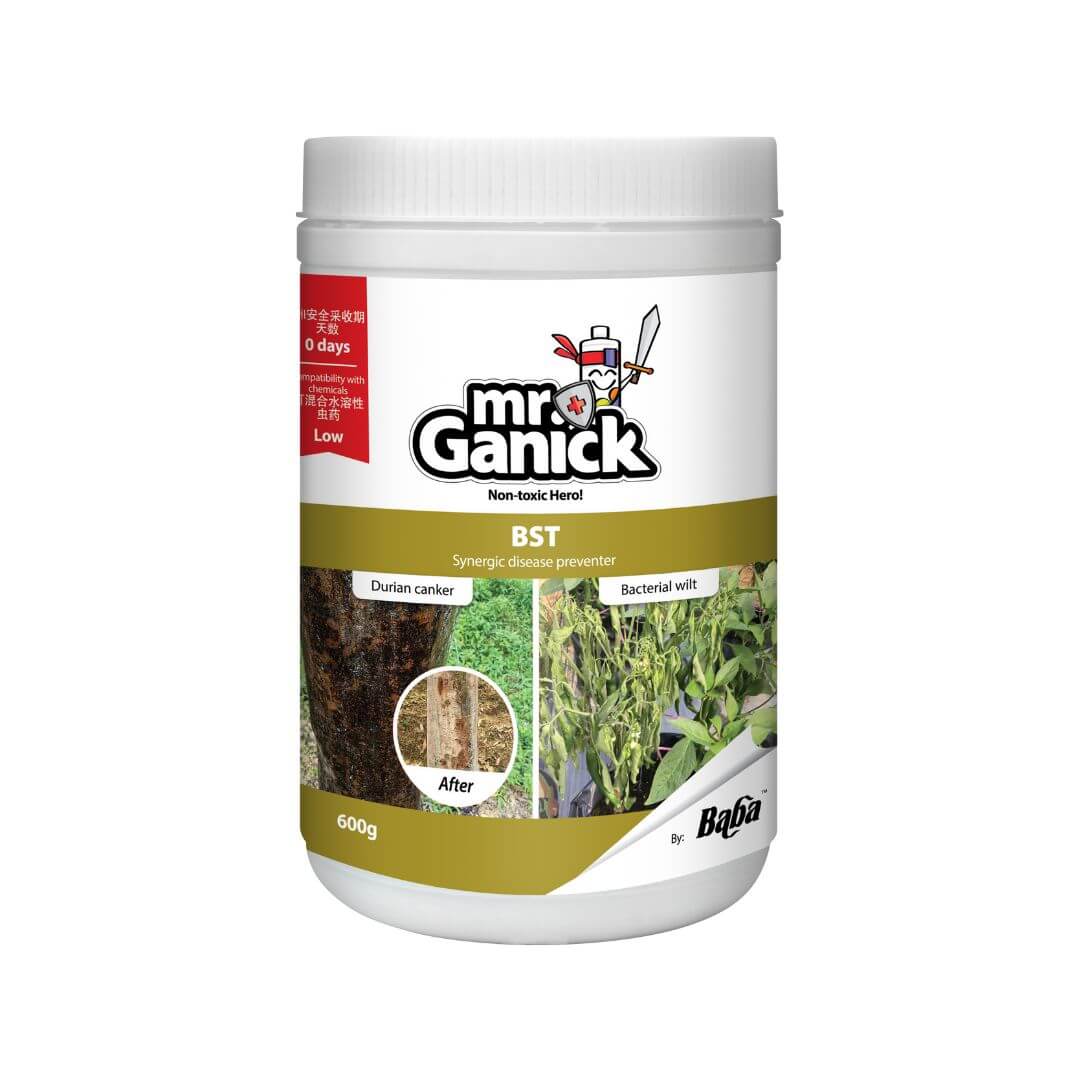
- Prepare the treatment mixture. Mix 1 tablespoon Mr Ganick BST + 5ml Mr Ganick Lepid 007 + 500ml water.
- Use a syringe to inject the solution directly into the hole until it overflows. Apply the mixed solution around the hole as well and brush it around the hole about 10 times for each hole.
- Repeat the treatment once a week for at least 3 consecutive weeks. Visible repair is usually seen within one week.

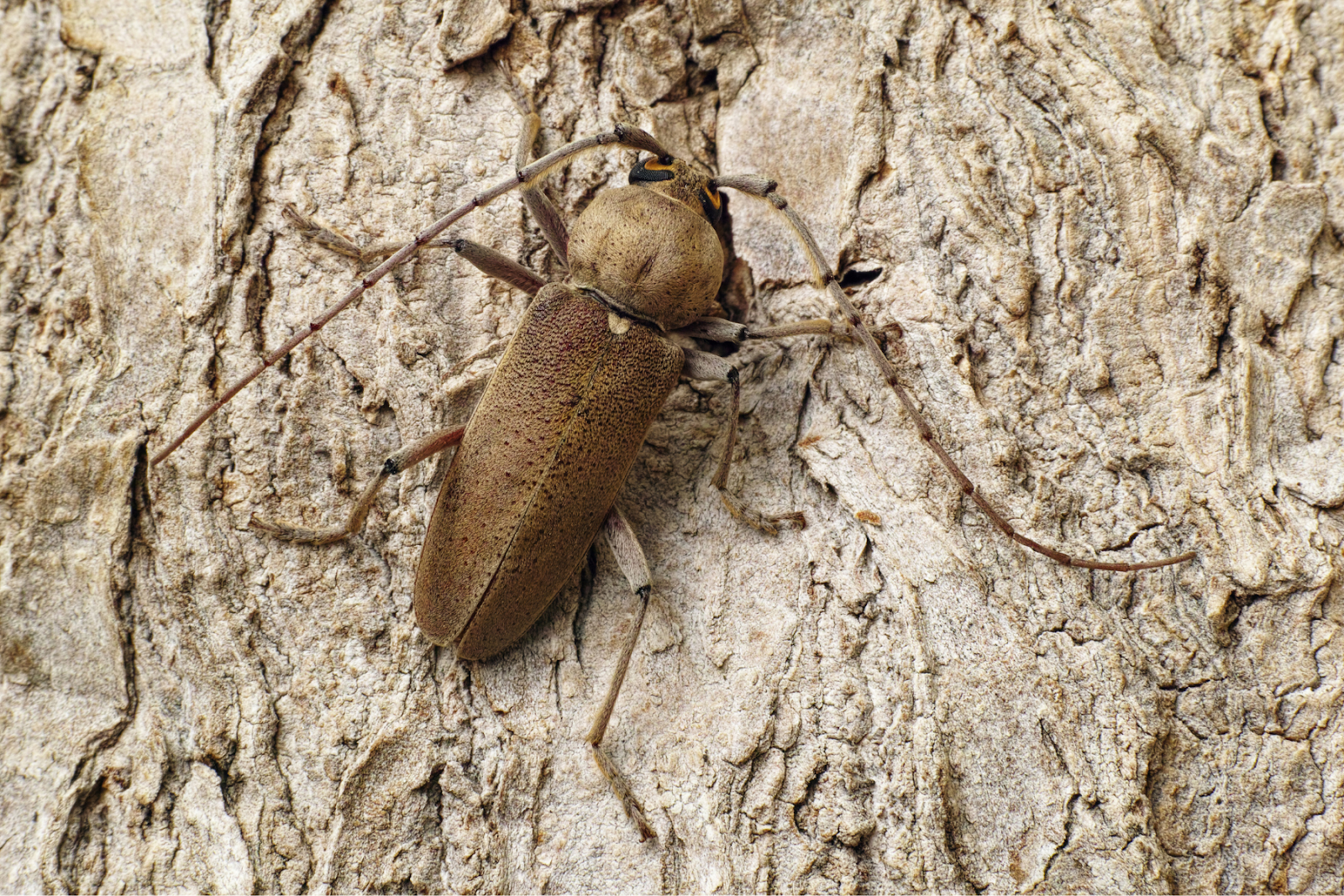
Treatment for large holes (over 10mm): Longhorn beetles


Large holes indicate a more aggressive pest that requires sealing and isolation.
- Use cloth or sandpaper to remove sawdust and debris around the hole.
- Shake well and pour Mr Ganick Dr Neem into the hole until it nearly overflows.
- Seal the opening with sticky soil such as loam, red soil, or clay. This traps larvae inside and prevents re-entry.
- During recovery, apply Baba Compost-based Fertilizer around the tree. Repeat the treatment after two weeks.
For severe cases:
If many trees are affected, use Mr Ganick Lepid 007, diluted 500 times, and pour directly into the holes for broader control.
How to identify the type of wood-boring insect?
The easiest way to diagnose the problem is by observing the hole size and surrounding symptoms.
- Holes smaller than 1mm → Likely caused by wood-boring beetles
- Holes larger than 10mm → Likely caused by longhorn beetles
Other warning signs include sawdust-like residue, oozing sap, weakened branches, or sudden wilting.
Why early treatment is important for durian trees?
Durian trees rely heavily on strong trunks to support fruit load. Wood-boring damage:
- Weakens structural strength
- Interrupts water and nutrient transport
- Increases risk of secondary fungal infections
Early intervention significantly improves recovery success.
Protect your durian trees from wood-boring insects
Wood-boring insects in durian trees can cause significant damage, but early intervention makes all the difference. Identify the signs, such as hole size, and apply the right treatments to protect your trees.
Regular monitoring, particularly during the warm and wet seasons, is crucial for maintaining healthy, productive growth.
Don’t let pests take over by browsing our garden accessories where you can find plant pesticides for durian trees.