

Papaya ringspot virus affects the leaves, stems, and fruits of papaya trees. It disrupts normal growth and significantly reduces fruit quality and yield. The virus is mainly transmitted by pests such as aphids and thrips, which carry the virus from infected plants to healthy ones.
Because PRSV spreads easily through pests, controlling vectors and reducing infection sources is critical.
What you should do if your papaya tree is infected?
To effectively address an infection in your papaya tree, it’s important to act quickly and follow the right steps. Here’s what you can do to restore its health and prevent further damage.
1. Remove severely infected leaves
Trim off leaves that show heavy yellow spotting or severe deformation. This helps reduce the virus load and lowers the chance of pests spreading the virus to new leaves or nearby trees.
2. Improve soil health with compost
Apply Baba Compost-based Fertilizer around the perimeter of the papaya tree. Apply about 3 kg per tree once every two weeks. Continue for two consecutive applications.Healthy soil improves nutrient availability and supports stronger plant resistance.
3. Control pests and reduce virus spread
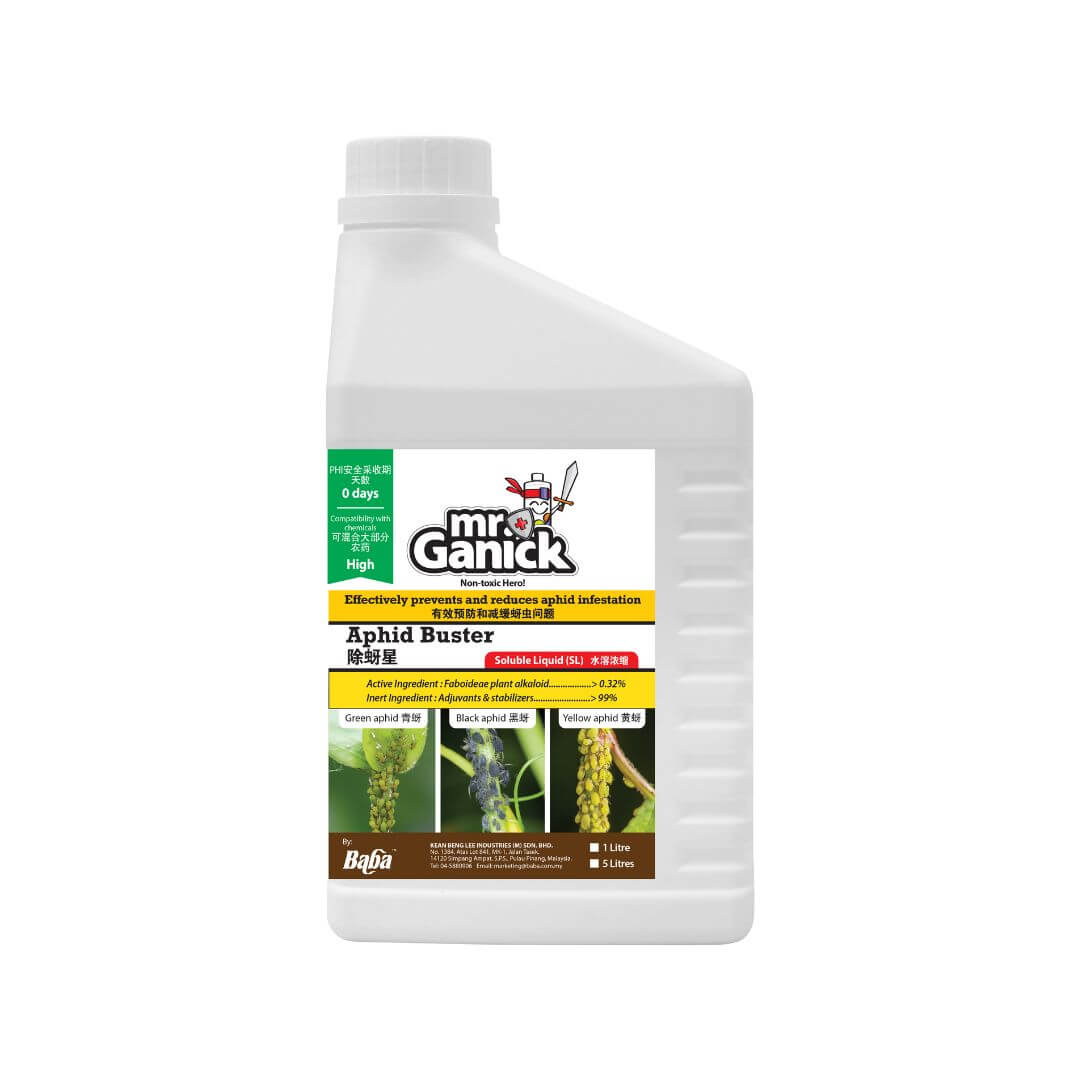
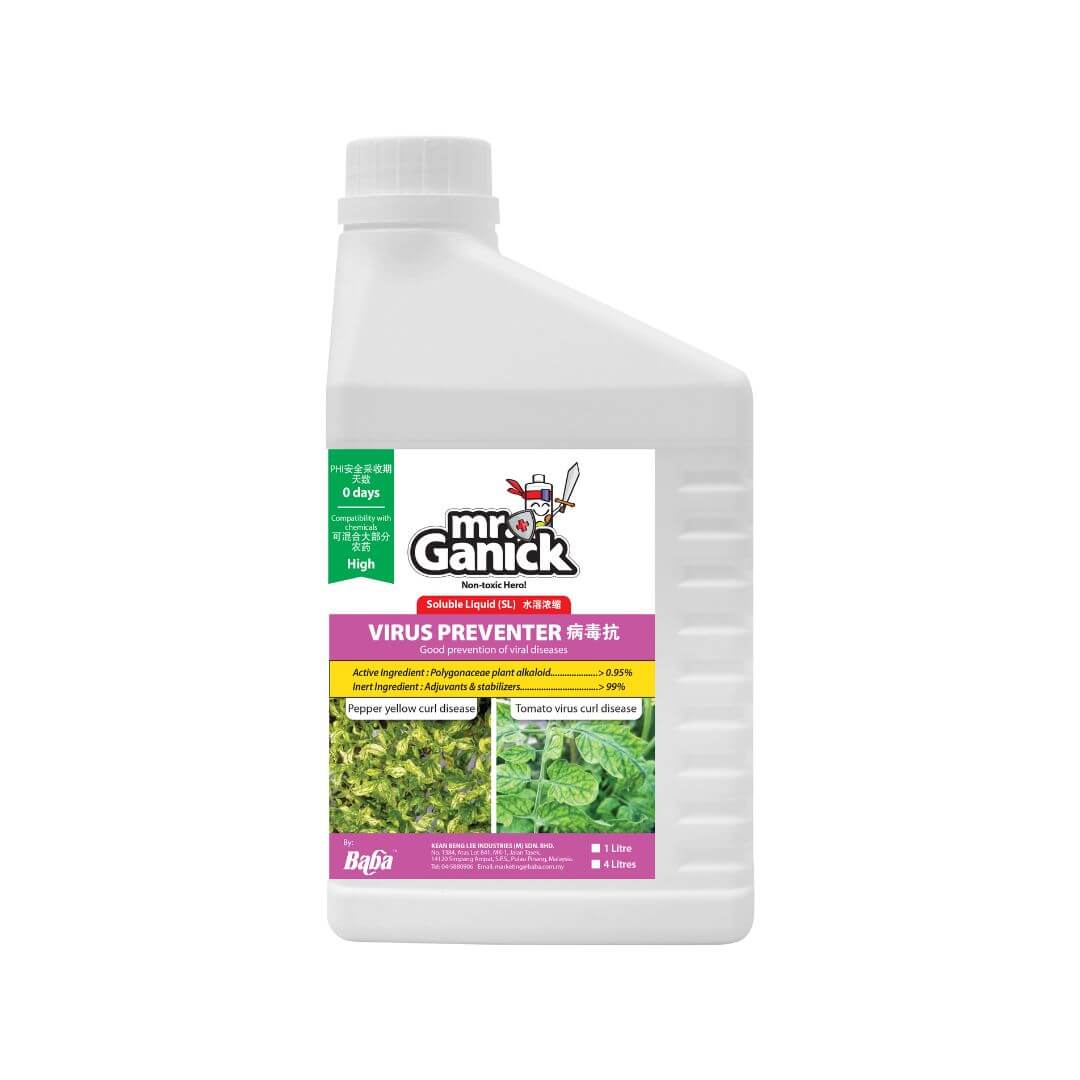
Since PRSV is spread by aphids and thrips, pest control is essential. Spray a mixture of Mr Ganick Aphid Buster Concentrate and Mr Ganick Virus Preventer. Mix 2ml Mr Ganick Aphid Buster Concentrate with 3ml Mr Ganick Virus Preventer and 1L water. Repeat the treatment for 3–4 weeks. This helps suppress pest populations and reduces the risk of the virus spreading to new leaves.
How to know if papaya ringspot virus is under control?
The clearest sign of improvement is new leaf growth. If newly emerging leaves:
- Appear green and normal
- Show no yellow mottling or ring patterns
Then the virus spread is likely being contained successfully.
5 common symptoms of papaya ringspot virus
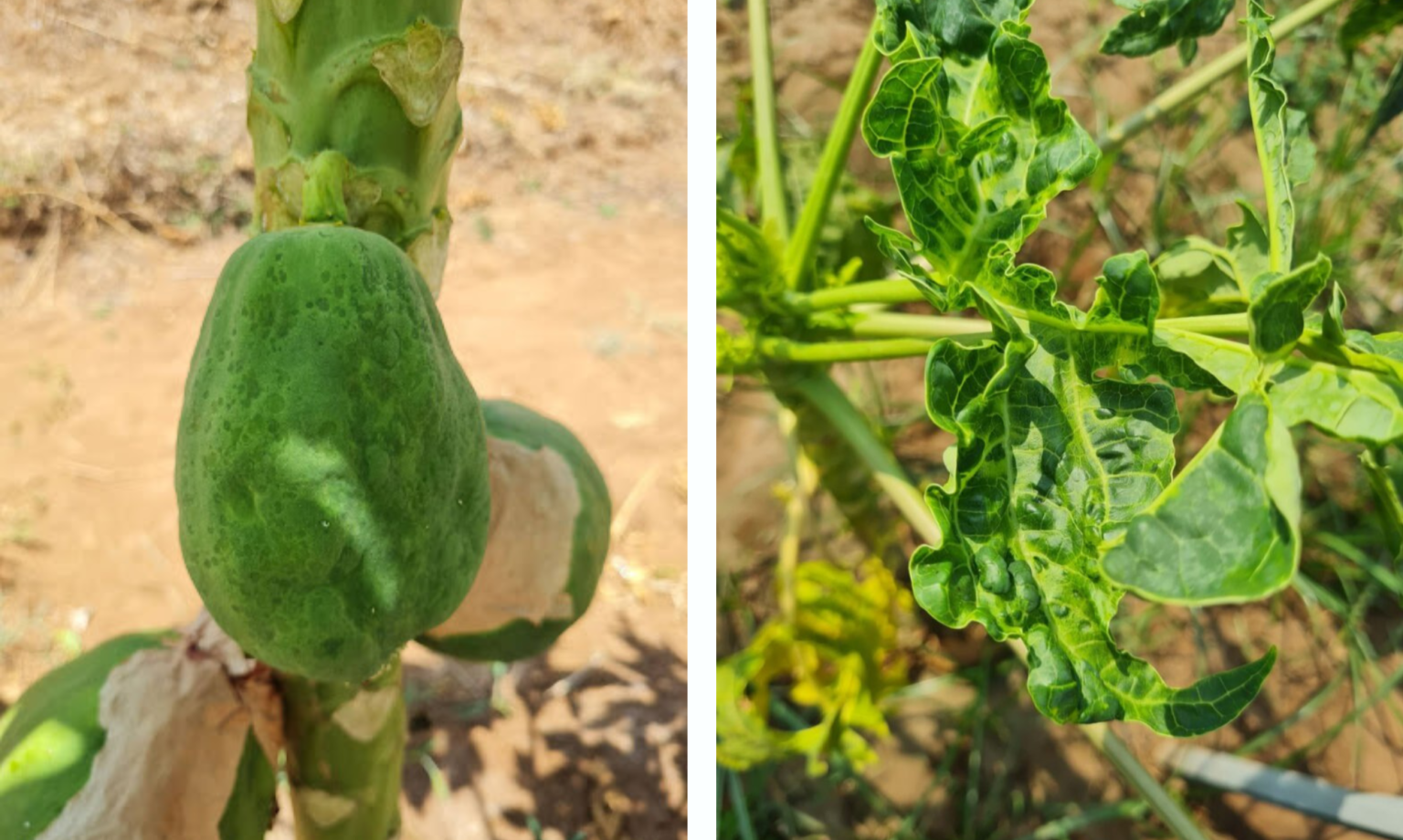
Infected papaya trees may show several visible signs, especially on young growth:
- New leaves turn yellow and become smaller
- Brown spots or mottled patterns appear on leaves
- Leaves may become distorted or malformed
- Oily, dark streaks develop along leaf stalks (petioles) and young stems
- Trees become stunted, with reduced flowering and fruiting
If infection occurs after fruit formation, papaya fruits may become deformed and develop distinct concentric ring patterns, which give the disease its name.
Why papaya ringspot virus is difficult to treat?
PRSV is a viral disease, not a fungal or bacterial infection. This means:
- Chemical treatments cannot “kill” the virus
- Recovery depends largely on the plant’s natural resistance
- Management focuses on containment and prevention
The goal is to protect new leaves, reduce pest activity, and strengthen the plant so it can continue growing despite the infection.
Protect your papaya tree and stop virus spread early

Although Papaya Ringspot Virus can be challenging to eradicate, early intervention is key. Pruning infected areas, strengthening soil nutrition, and maintaining consistent pest control will help manage the virus effectively.
Protect new growth and prevent the spread of the virus to ensure your papaya tree thrives and continues producing fruit.
Browse our range of gardening accessories and treatments, including fertilizer for fruiting and plant pesticides, today to get started!


