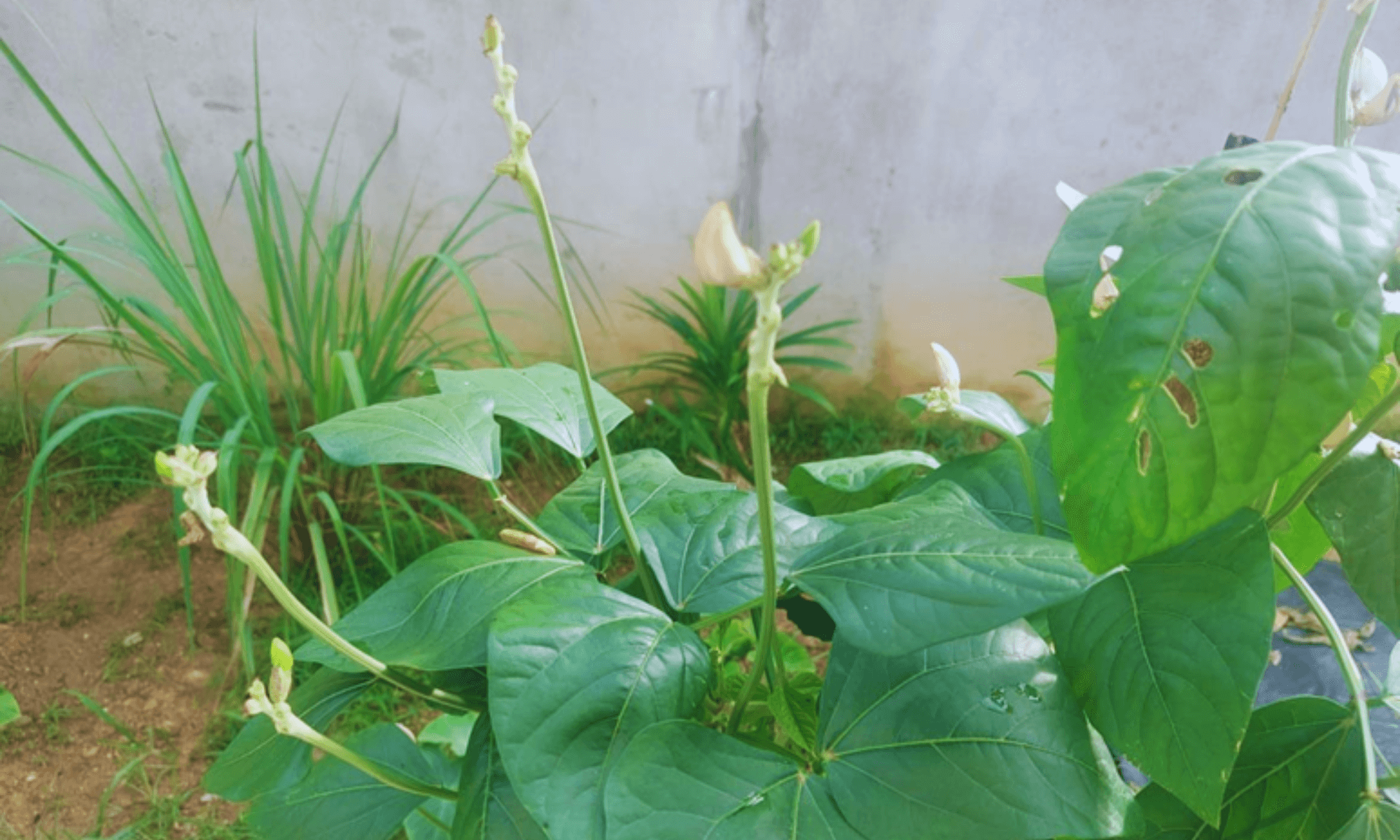
If you notice tiny black flies hovering around your plants, especially near the soil surface, they are most likely fungus gnats. These small insects are commonly attracted to moist soil rich in organic matter. After rainfall or overwatering, the damp surface becomes an ideal breeding ground for them.
Fungus gnats are usually more of a nuisance than a serious threat. While they may leave small black droppings on leaves, these droppings are generally harmless—similar to worm castings. However, large populations can become irritating and may indicate overly wet soil conditions.
How to reduce fungus gnats effectively?
1. Use neem-based spray for prevention
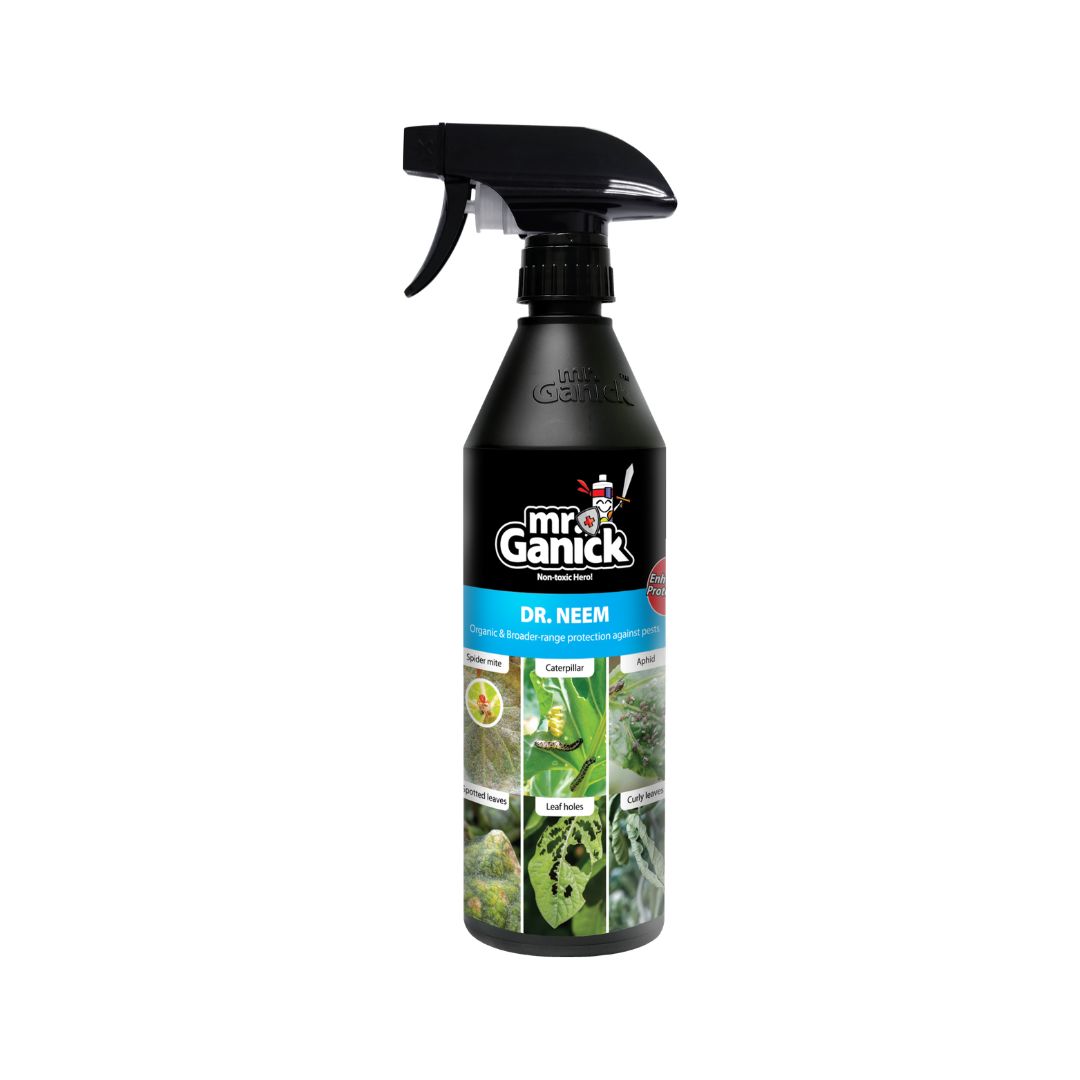
- Spray Mr Ganick Dr Neem once a week to deter fungus gnats from gathering. Neem-based solutions help reduce adult populations and interfere with their breeding cycle. Spray lightly over the soil surface and around the base of the plant.
- If fungus gnat numbers are high, pour Mr Ganick Dr Neem directly onto the soil surface. This helps target larvae in the upper soil layer and reduces their development into adult flies.
Consistency is important—continue treatment weekly until the population noticeably declines.
2. Dry the soil surface with sand
Spread 1–2 cm of sand over the soil surface. This helps improve surface drying, disrupt egg-laying and reduce larval survival. A dry top layer makes the environment less attractive for adult gnats.
Additional prevention tips
- Avoid overwatering; water only when the topsoil feels dry
- Ensure pots have proper drainage holes
- Improve airflow around plants
- Remove decaying plant debris from the soil surface
Healthy watering practices are the most effective long-term solution.
Why do fungus gnats appear?
Fungus gnats thrive in:
- Continuously moist soil
- Soil rich in undecomposed organic fibers
- Poorly ventilated planting areas
- Overwatered pots or garden beds
Their larvae live in the top layer of damp soil, feeding on organic matter. When conditions remain wet, their population increases rapidly.
How to know the problem is improving?
Signs of control include:
- Fewer adult flies hovering
- Reduced movement near soil surface
- Dry topsoil within a day or two after watering
Completely eliminating fungus gnats may take several weeks, but consistent care will significantly reduce their numbers.
Stop fungus gnats and protect your plants early
Small black bugs flying around plants are usually fungus gnats that thrive in overly moist, organic rich soil. Reducing surface moisture and controlling pests early helps stop the infestation before it spreads to plant roots.
Apply organic pesticide for plants regularly to control fungus gnats and protect plants from further damage.