Spider mites are among the most dreaded pests for any gardener. These tiny sap-suckers can multiply rapidly, turning a healthy green plant into a dusty, yellowing skeleton in a matter of days.
If you notice a significant number of plants in your planting area looking speckled, dusty, or covered in fine webbing, it indicates a potential situation of rapid spread and high density. Ignoring these signs is not an option. In such cases, comprehensive pest control measures need to be implemented immediately to effectively address the spider mite issue before it kills your garden.
Here is your complete guide to identifying, treating, and recovering from spider mites using organic solutions.
How to identify a spider mite attack?
Before you treat, you must confirm the enemy. Spider mites are microscopic, but they leave visible clues:
- Stippling: Tiny yellow or white dots on the leaves where mites have sucked out the plant juices.
- Webbing: Silky, fine webs usually found on the undersides of leaves or between stems (often confused with regular spider webs).
- Leaf Discoloration: Leaves turning bronze, yellow, or greyish.

Step-by-step guide to removing spider mites
When dealing with a severe infestation of spider mites, chemical nukes aren’t necessary. Organic methods are safer for your family, pets, and the soil environment. Consider the following steps:
1. Quarantine and cleanup
Isolate the infected plant immediately to stop the spread. Remove severely affected leaves hosting spider mites—these leaves will not recover and serve as breeding grounds. Seal them in plastic bags and dispose of them in a distant location (do not compost them).
2. The organic treatment: Mr Ganick Dr Neem
In the presence of spider mites, the use of a natural insect repellent like Mr Ganick Dr Neem is highly recommended. Derived from the neem tree, neem oil has potent insecticidal and repellent properties. It works by coating the mites, suffocating them, and disrupting their hormonal life cycle, serving as an effective deterrent against future pests.
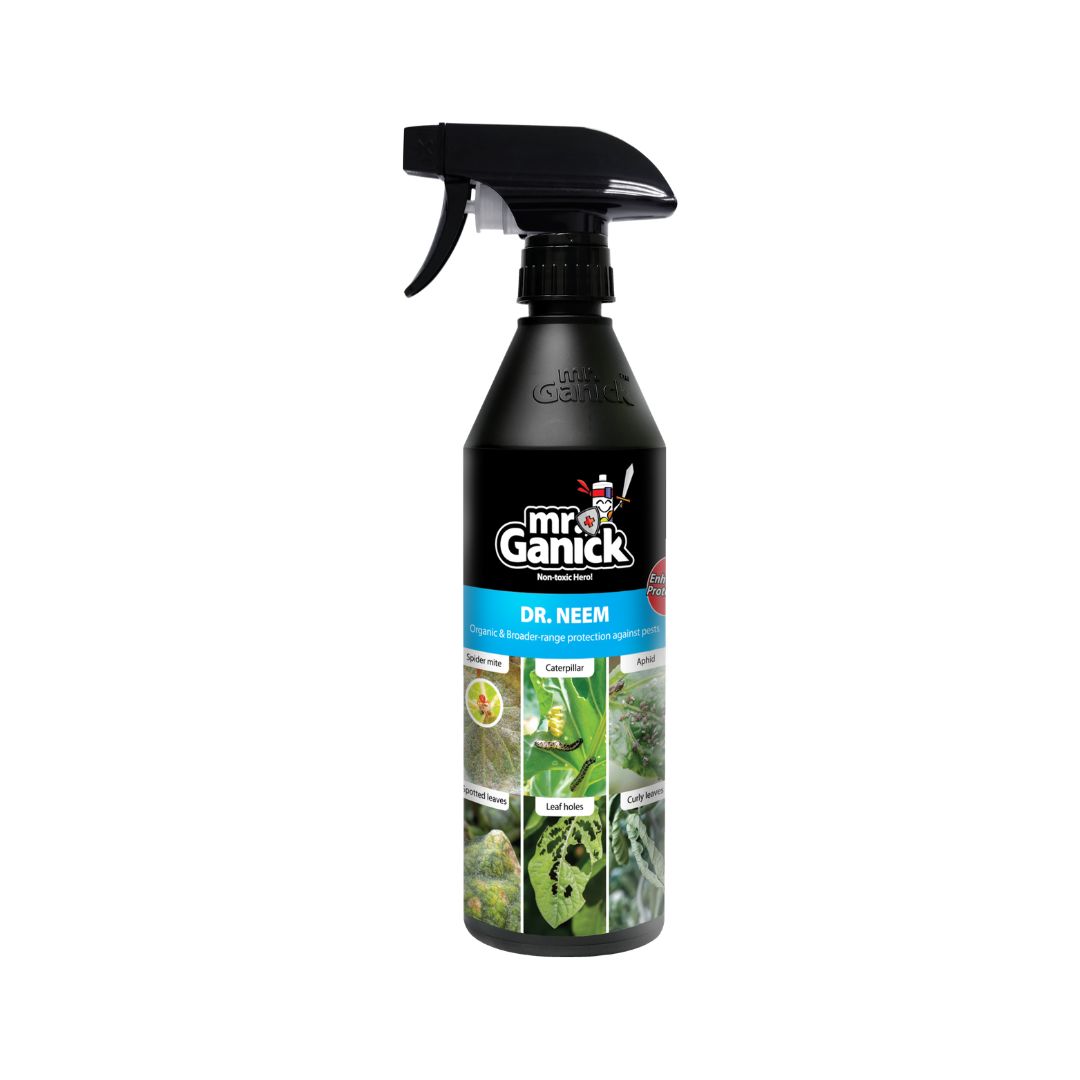
Instructions for spraying:
- Frequency: For preventive or mild cases, consider spraying once a week. For severe conditions (active infestation), spray every three days until the webbing disappears.
- Spray Mr Ganick Dr Neem generously on the trunk, canopy, and crucially, the undersides of the leaves.
- Shake the bottle well before use to ensure the active ingredients are mixed.
- Spray in the early morning or late afternoon.
Post-treatment: Helping your plant recover
Killing the mites is only half the battle. Your plant has been stressed and needs nutrients to regrow its foliage.
Once the pests are under control, apply compost or a high-nitrogen leafy fertilizer, such as Mr Ganick 532 Organic Leafy Fertilizer. This encourages the rapid growth of new, healthy leaves to replace the damaged ones.
Once the plant has stabilized and developed a lush new canopy, you can switch to Mr Ganick 549 Organic Flower Bloom & Stem Fertilizer to support flowering and strong stem development.


Prevention is better than cure
Spider mites thrive in hot, dry conditions. To prevent their return:
- Humidity: Mist your plants regularly or use a humidifier, as mites hate moisture.
- Soil Health: Use high-quality potting mix and consider biodegradable flower pots which allow for better soil aeration and root health, making plants naturally more resistant to pests.
- Routine Checks: Inspect the undersides of leaves weekly.
By acting fast with organic solutions like Mr Ganick Dr Neem, you can save your garden without resorting to harsh chemicals.
Discover our range of organic pesticides for plants at your trusted gardening supplier, Baba and give your garden the safe, eco-friendly protection it deserves.