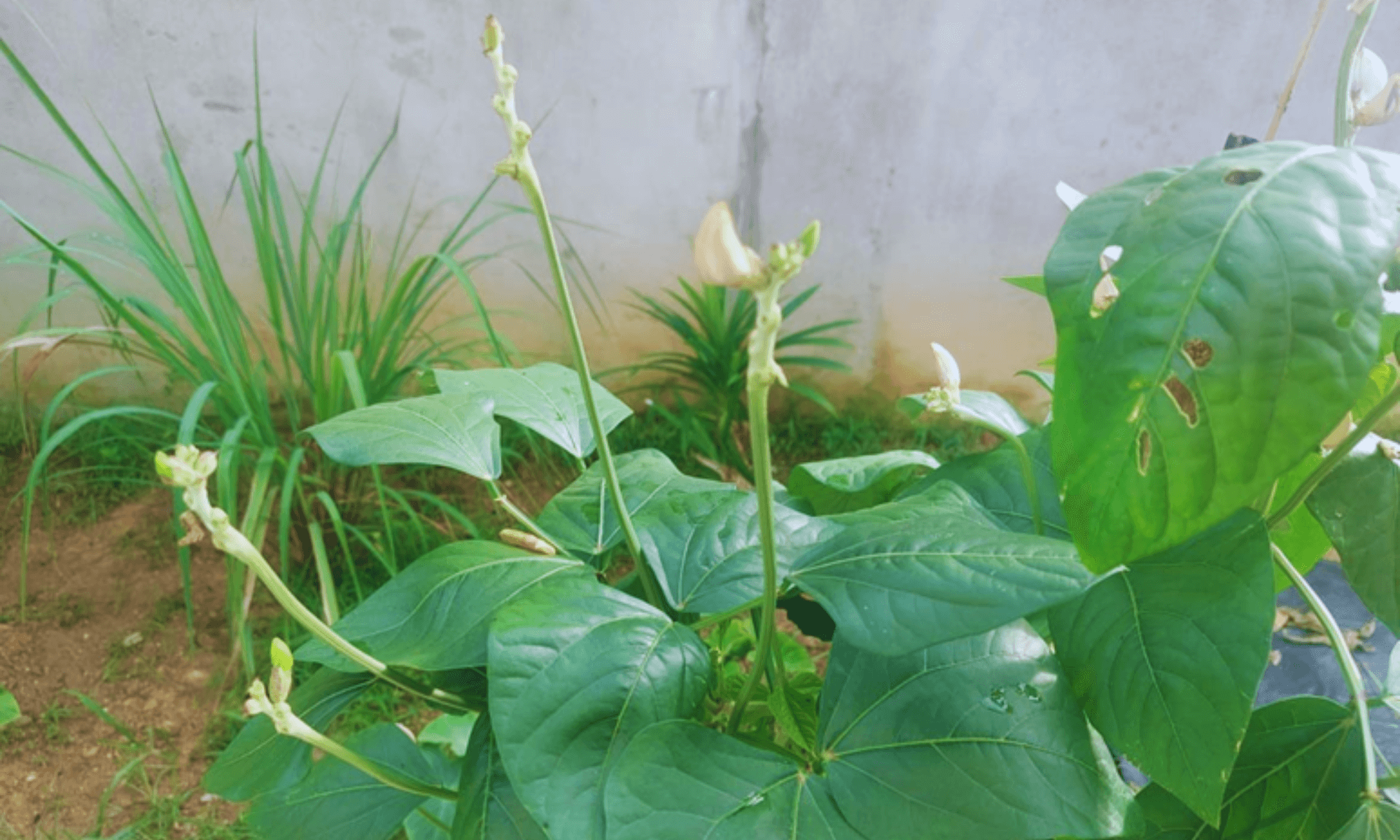
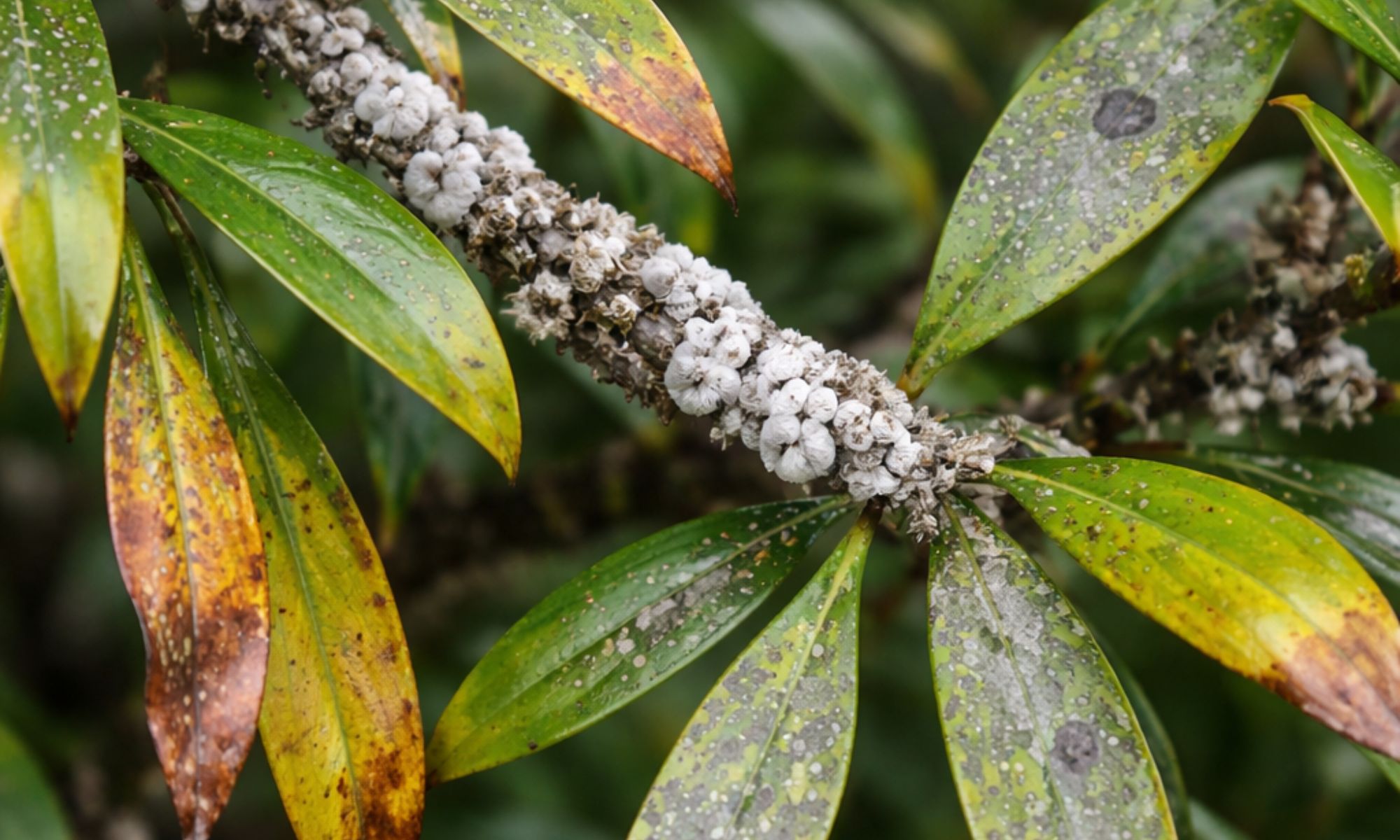
Fruit cracking is a common issue in many crops, especially tomatoes and melons. You may notice healthy-looking fruits suddenly developing splits on the surface, reducing their quality and market value. While cracked fruits are usually still edible, the damage exposes them to pests and diseases.
In most cases, fruit cracking is caused by nutrient imbalance and irregular watering, rather than a disease problem.
How to prevent and reduce fruit cracking?
1. Balance your fertilizer rotation
To provide the necessary minerals and growth support, alternate applications of:
- Apply Baba Compost-based Fertilizer (about 2 handfuls or 4 tablespoons). This enriches the soil structure and provides a base of organic matter.
- Apply Mr Ganick 426 Organic Melon Vegetable Fertilizer (1 handful or 2 tablespoons). This targeted formula provides the specific nutrients needed for fruit skin elasticity and sweetness.


2. Direct foliar energy boost
Spray Mr Ganick 8 in 1 360 Plant Energizer over the entire foliage and stems to supplement essential minerals.
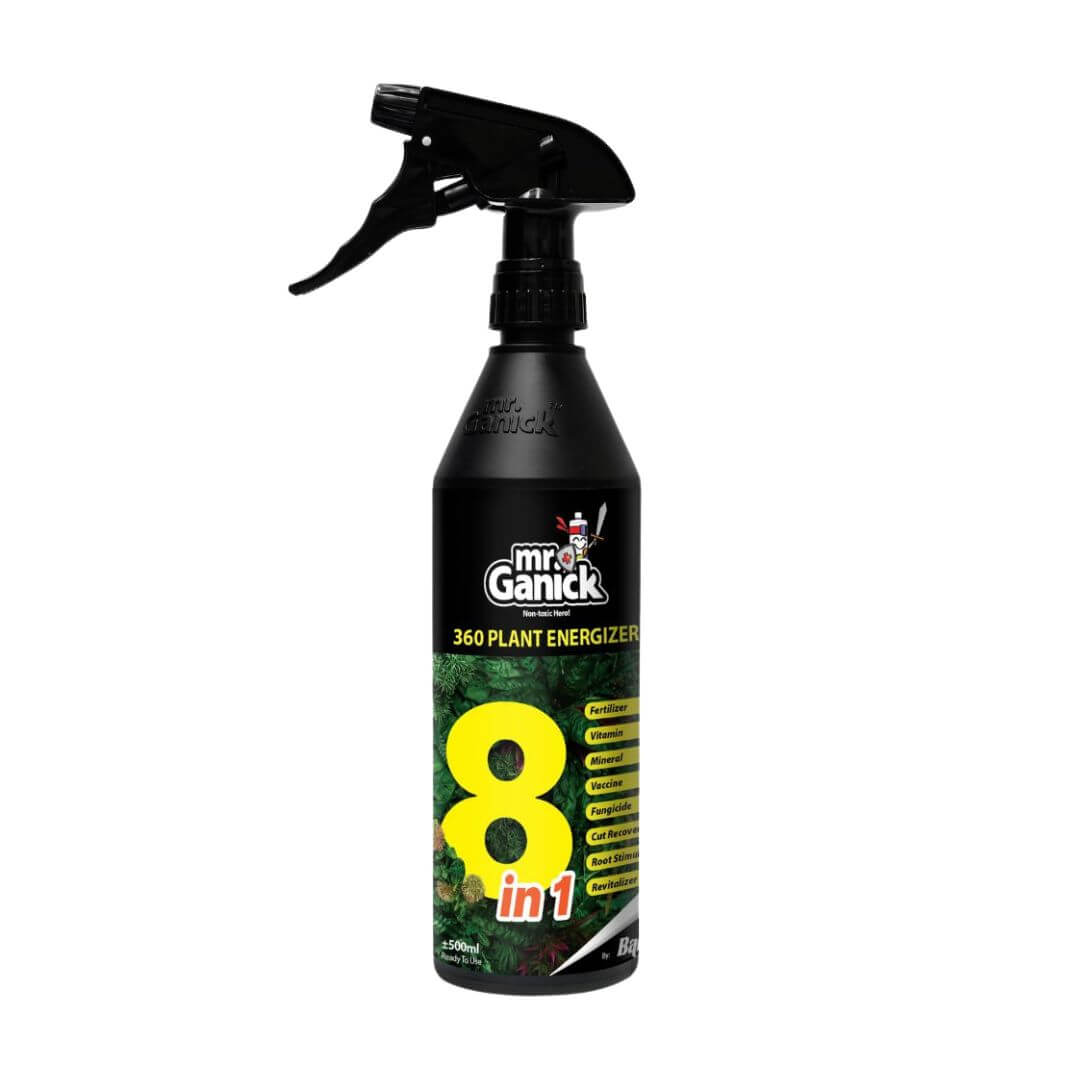
- Note: Only spray the leaves and stems. Avoid the roots to prevent over-fertilization.
- Best Practice: Shake well and avoid spraying under direct noon sunlight to prevent leaf burn. For severe cases, spray every three days; for prevention, once a week is sufficient.
3. Address soil health and yellowing
If your leaves are turning yellow alongside fruit cracking, use wood vinegar spray both the plant and the soil. This helps reduce “yellow leaf disease” and conditions the soil to better manage moisture levels.
By stabilizing your watering schedule and ensuring a steady supply of calcium and organic nutrients, you can protect your harvest from the pressure of cracking.
2 main causes of fruit splitting
- Mineral deficiency (specifically calcium)
Calcium acts as the “glue” that holds plant cell walls together. If your plant lacks calcium or other trace minerals, the skin becomes brittle and loses its ability to expand. This is often why fruits crack even under normal conditions.
- Irregular watering & internal pressure
This is the most common cause. When a plant experiences a dry spell followed by heavy rain or excessive watering, the fruit rapidly absorbs water. This creates high internal turgor pressure. In tomatoes, for example, the pulp expands so quickly that the skin simply bursts.
Overwatering often comes with a secondary symptom: yellowing leaves caused by root suffocation.
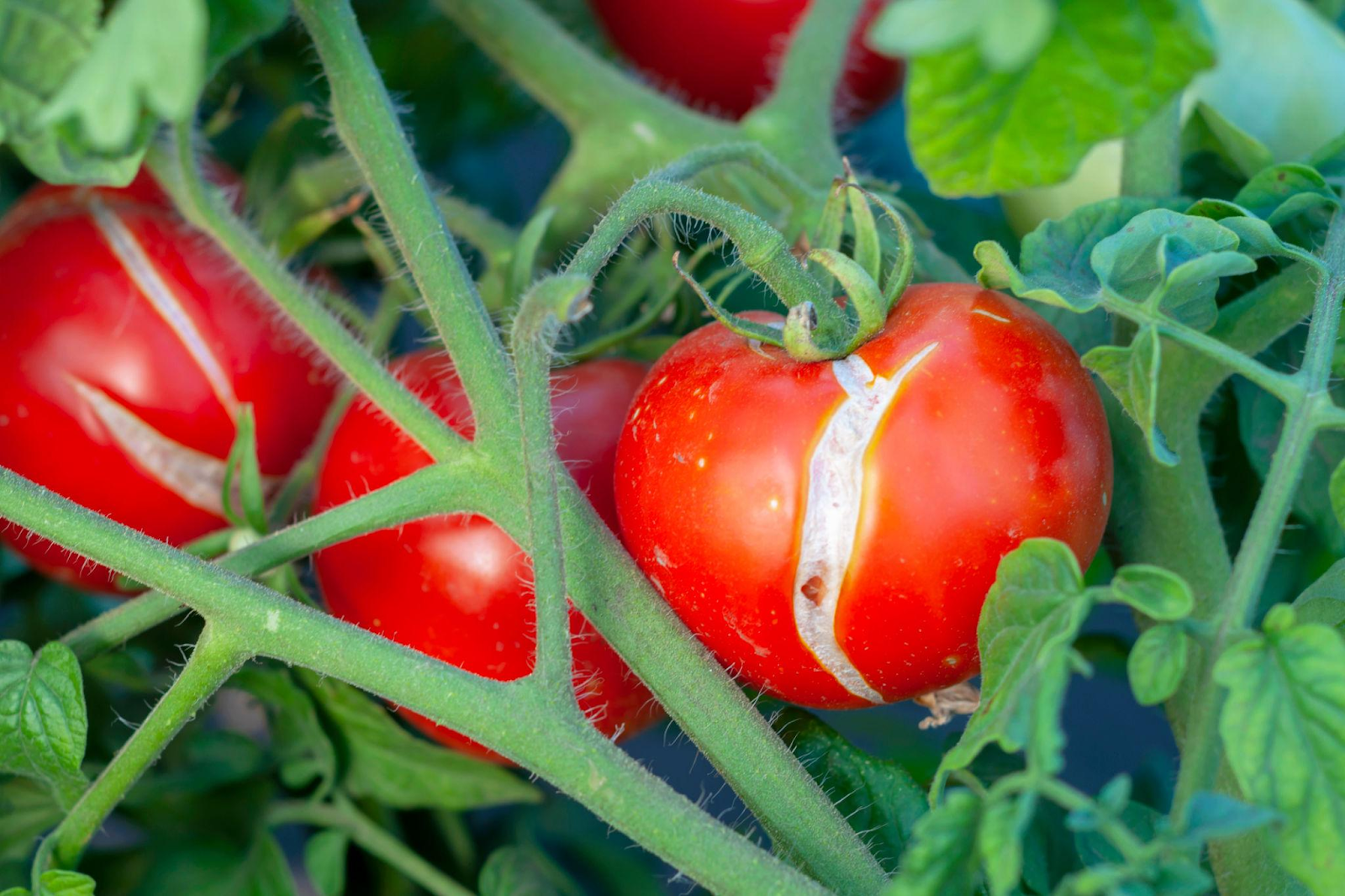
Fruit cracking is mainly caused by mineral imbalance and inconsistent watering, not pests or viruses. With proper nutrition, balanced fertilization, and stable watering practices, fruit quality can significantly improve.