If your rose leaves show black circular spots with yellowing, it is most likely rose black spot disease—not downy mildew—and early treatment with Mr Ganick Organic Plant Acid RTU can help control the spread. This fungal disease is very common, especially in humid or rainy conditions, and can weaken plants quickly if left untreated.
Although downy mildew is another fungal issue, its symptoms are different, so proper identification is important.
How to identify rose black spot
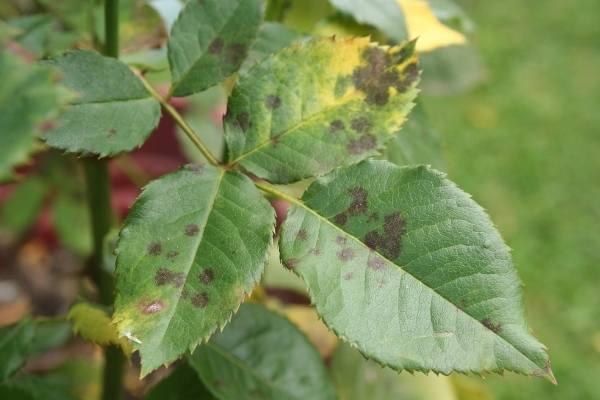
Rose black spot typically appears as:
- Dark black or deep brown spots on leaves
- Yellowing around the spots
- Leaves gradually turning yellow and dropping
This disease spreads easily through water splashes and thrives in high humidity.
Why it’s not downy mildew
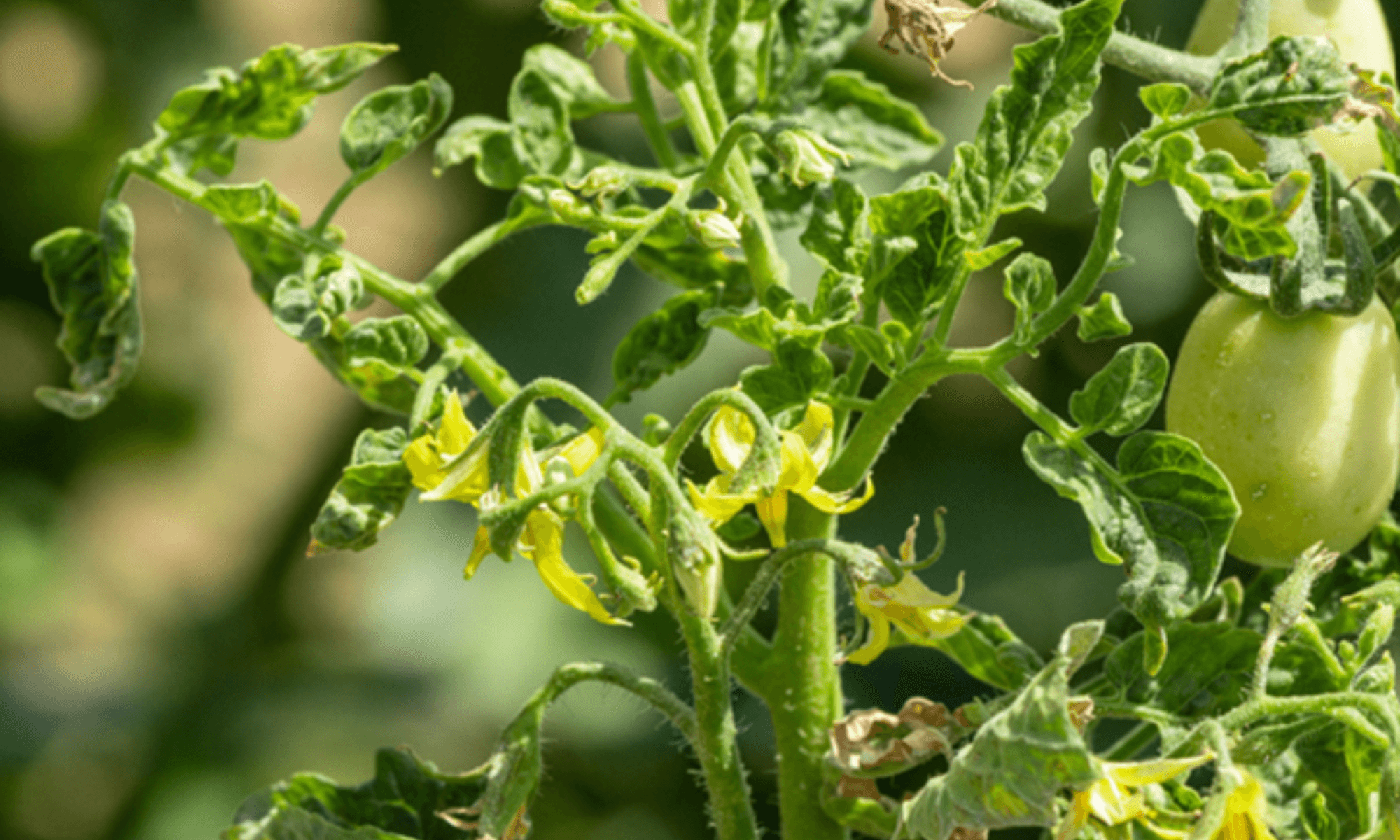
Downy mildew usually causes:
- Purple or reddish patches
- Fuzzy growth on the underside of leaves
- More irregular spotting patterns
In contrast, black spot disease has clear round dark spots with yellow halos, making it easier to distinguish.
How to treat rose black spot (home garden)
Start by pruning yellow and infected branches to reduce fungal spread. Always remove fallen leaves as well, as they can carry spores.
Next, spray Mr Ganick Organic Plant Acid RTU on both the leaves and the base of the plant. Apply once a week, or twice a week during rainy seasons when fungal activity is higher.
To strengthen the plant, apply either:
- Baba Compost-based Fertilizer (about two handfuls)
- Or Mr Ganick Bougainvillea & Rose Booster (about 15 g)
Apply weekly to improve plant resistance and support new growth.


For large-scale planting
For farms or large areas, use a stronger treatment with:
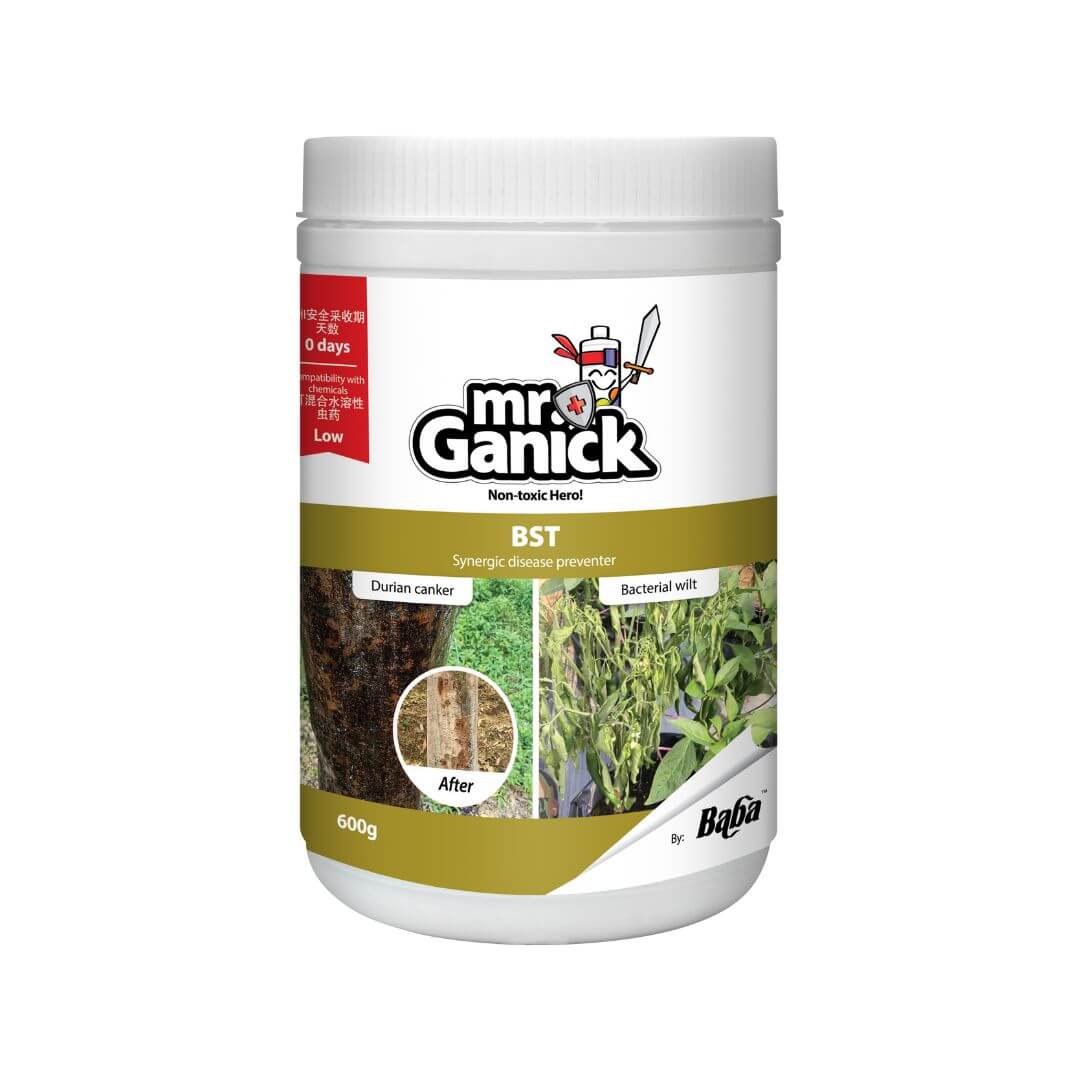
- Mr Ganick BST (20 g / 20 L water)
- Add a surfactant such as Organic Silwet for better coverage
Ensure even spraying across all plant surfaces for effective control.